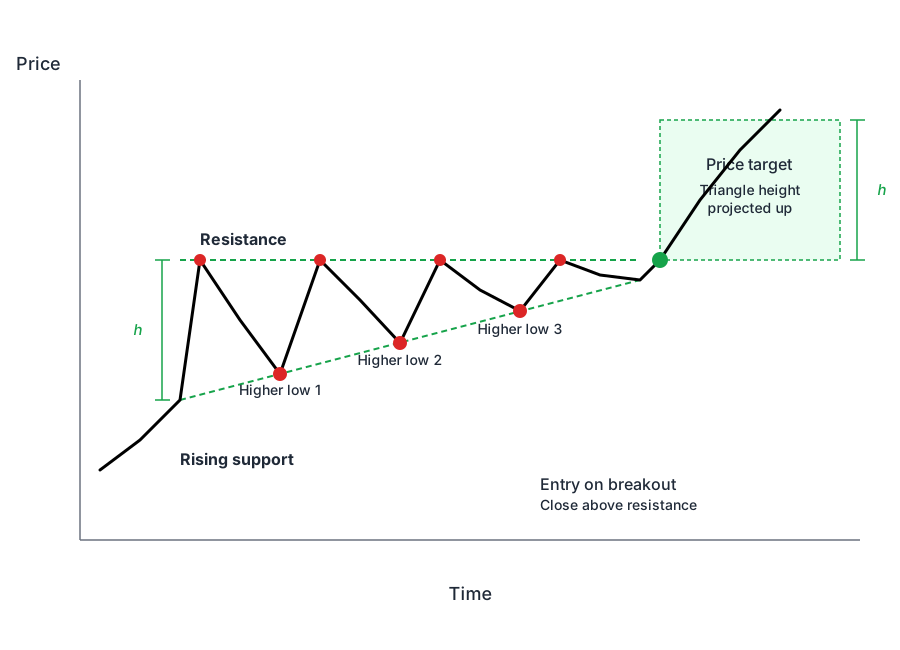
An ascending triangle is a bullish continuation pattern that typically forms during an uptrend. It is defined by a flat horizontal resistance level along the top and a rising support trendline along the bottom, created by a series of higher lows.
A breakout occurs when price closes above the horizontal resistance line, signalling the uptrend is likely to continue.
Ascending triangle anatomy showing flat resistance, rising support, three higher lows and the breakout target projected from the pattern height (educational example).
How to Identify an Ascending Triangle on a Chart
A prior uptrend or bullish momentum.
At least two touches of a horizontal resistance level.
At least two higher lows forming an ascending support trendline.
Price compressing between the two boundaries.
A breakout candle closing above resistance.
Why the Pattern Forms (Market Psychology)
The ascending triangle reflects growing buyer conviction. Each higher low demonstrates that buyers are stepping in earlier. As the range tightens, selling supply at resistance is gradually absorbed. When supply is exhausted, price breaks through.
How to Trade an Ascending Triangle Step by Step
Identify the pattern. Confirm horizontal resistance and at least two higher lows.
Wait for the breakout. The pattern is not confirmed until price closes above resistance.
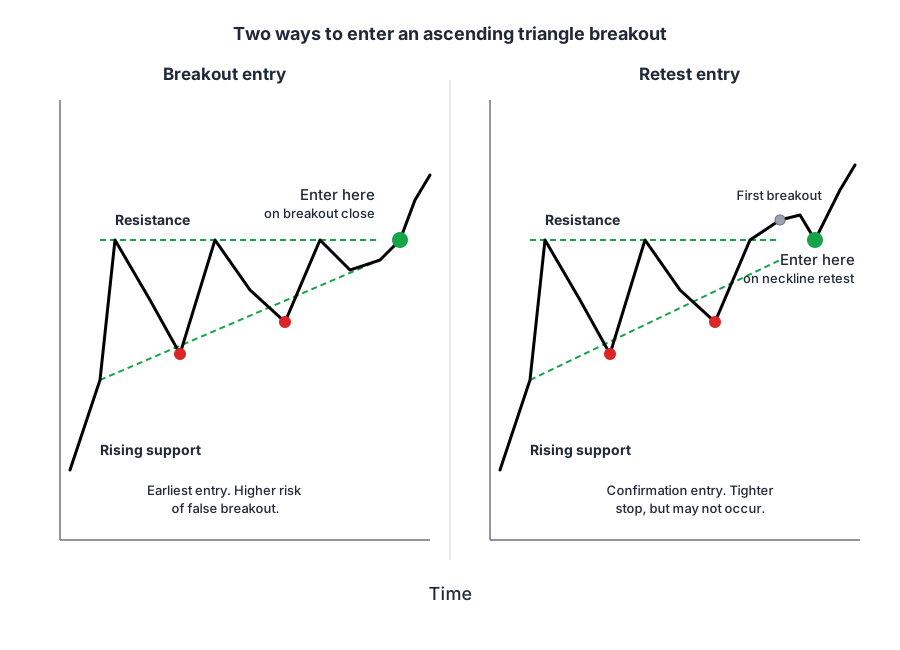
Plan your entry. Enter on the breakout or wait for a retest.
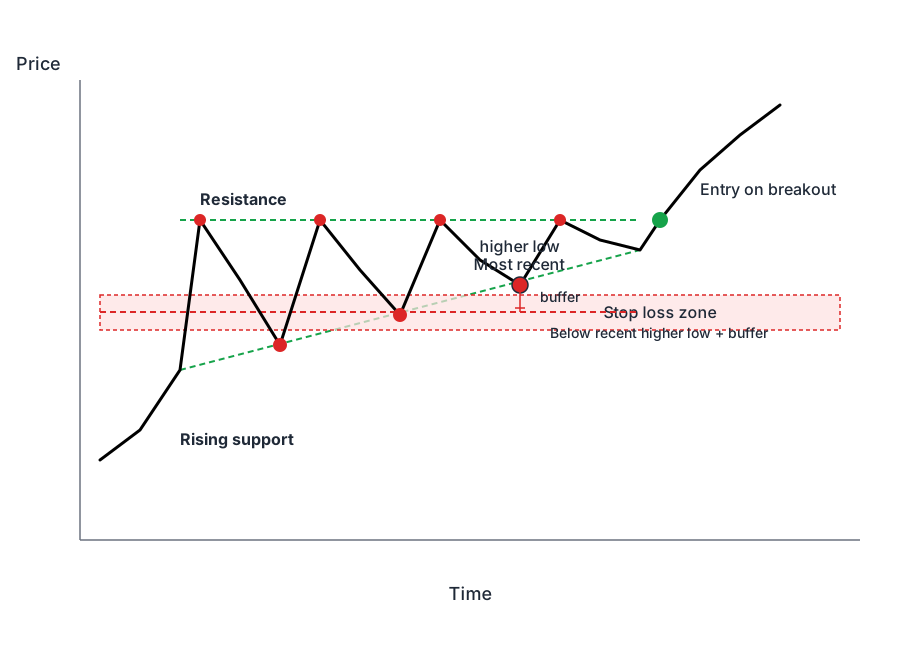
Set your stop loss. Below the most recent higher low within the triangle.
Define your target. Measure the height at the widest point, project upward.
Manage the trade. Trail your stop as price advances.
Two common entry approaches: entering on the breakout candle close above resistance, or waiting for a retest of resistance as new support before entering.
Where to Place a Stop Loss
Below the last higher low within the triangle. Add a buffer for spreads and normal wick activity.
Stop loss placement below the most recent higher low. The buffer accounts for spreads and normal price noise.
Risk Management Considerations
Limit risk to 1% to 2% per trade.
Ascending triangles can break downward. Be prepared for failure.
Check the broader trend on higher timeframes.
Common Mistakes Traders Make
Entering during consolidation before the breakout.
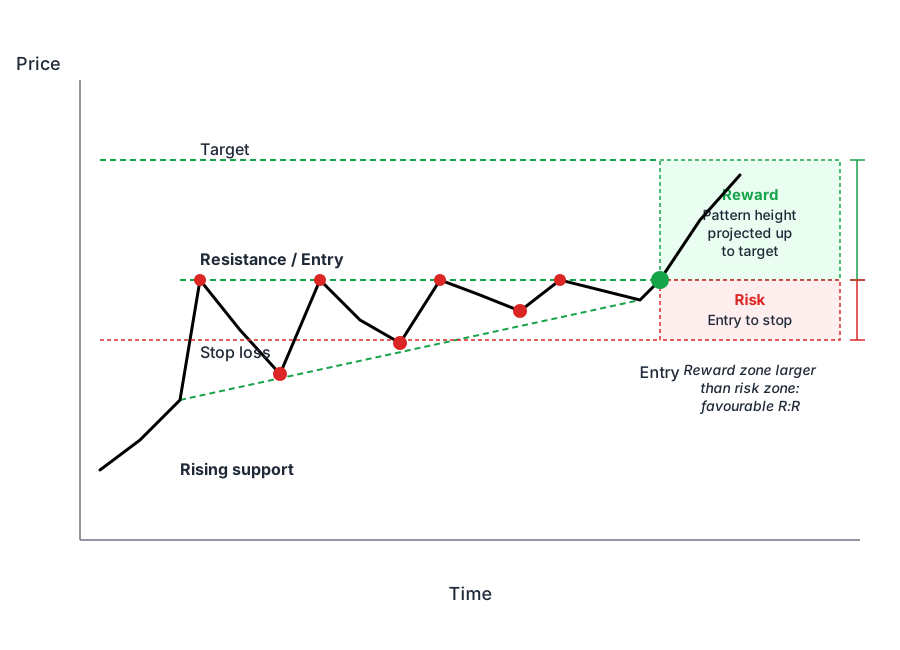
Suppose USD/CHF enters consolidation around 0.9000. Resistance is tested three times at 0.9000, while lows form at 0.8920, 0.8940 and 0.8960. When price closes above 0.9000, a trader enters long at 0.9010 with a stop at 0.8950.
This is a hypothetical example for educational purposes only.
Risk-to-reward breakdown showing entry at the breakout, stop loss below the recent higher low, and the measured-move target.
Final Thoughts
The ascending triangle is a well-established continuation pattern. No pattern guarantees a profitable result. Always trade with disciplined risk management.
Risk Warning: Spread betting and CFDs are complex instruments and come with a high risk of losing money rapidly due to leverage. Between 70-80% of retail investor accounts lose money when trading CFDs. You should consider whether you understand how CFDs work and whether you can afford to take the high risk of losing your money.
Common questions
What is an ascending triangle pattern?
An ascending triangle is a bullish continuation pattern that typically forms during an uptrend. It is defined by a flat horizontal resistance level along the top and a rising support trendline along the bottom, created by a series of higher lows. A breakout occurs when price closes above the horizontal resistance line, signalling the uptrend is likely to continue.
Is the ascending triangle bullish or bearish?
The ascending triangle is a bullish continuation pattern. It typically forms within an existing uptrend and signals that buyers are gaining ground as each higher low compresses price closer to resistance. That said, the pattern is not infallible. Ascending triangles can break downward, particularly in weaker trends, so always wait for a confirmed breakout above resistance before treating the setup as bullish.
How many touches do I need to confirm an ascending triangle?
At least two touches of the horizontal resistance level and at least two higher lows forming the ascending support line. More touches increase the reliability of the pattern. Drawing the pattern on too few data points is one of the most common mistakes, as random price action can resemble a triangle without representing genuine accumulation. Look for clear, well-defined boundaries before trading.
Where should I place a stop loss on an ascending triangle?
Your stop loss should sit below the most recent higher low within the triangle, with a small buffer for spreads and normal wick activity. This is the logical invalidation point. If price falls below that level, the bullish structure of higher lows has broken and the pattern is no longer valid. Avoid placing your stop too tight, as normal pullbacks within the triangle can trigger it.
How do I calculate the price target on an ascending triangle breakout?
Measure the height of the triangle at its widest point, then project that distance upward from the breakout point. So if the triangle is 80 pips tall at its widest point, the measured target is 80 pips above where price closes above resistance. As with all measured-move targets, price may stall at intermediate resistance before reaching the full target, so consider taking partial profits.
What's the difference between an ascending triangle and a bull flag?
Both are bullish continuation patterns but they form differently. An ascending triangle has a flat horizontal resistance line and a rising support line, with price compressing between them over time. A bull flag forms after a sharp upward move (the flagpole) and consolidates in a slight downward or sideways channel. Triangles tend to develop over longer timeframes; flags are typically shorter consolidations.