What Is a Double Bottom Pattern?
A double bottom is a bullish reversal chart pattern that forms after a sustained downtrend. It signals that selling pressure may be exhausting and that buyers are stepping in at a defined support level.
The pattern looks like the letter "W" on a price chart. Price falls to a low, bounces upward, pulls back to a similar low, then rallies again. The pattern is confirmed when price breaks above the neckline.
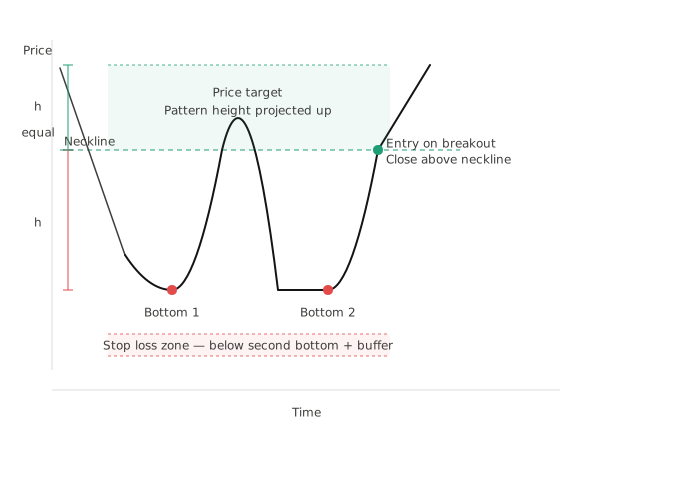
Notice the W-shaped price action with two distinct lows at roughly the same level. The neckline connects the interim high between the bottoms. The measured move target is projected upward from the breakout point by the same distance as the pattern height.
How to Identify a Double Bottom on a Chart
- A clear prior downtrend lasting several candles or sessions.
- A first low where price bounces upward.
- A pullback that forms an interim high (the neckline).
- A second low at roughly the same price level as the first.
- A breakout above the neckline, ideally on increased volume.
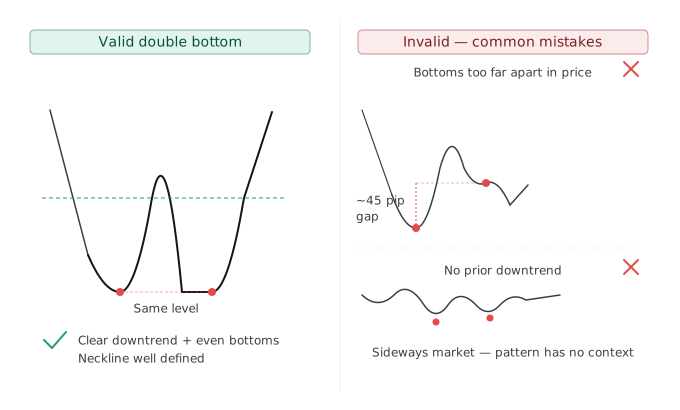
The left panel shows a valid double bottom with a clear downtrend, two well-defined lows, and a neckline breakout. The right panel shows an invalid setup where the pattern lacks a preceding downtrend or fails to break the neckline.
Why the Pattern Forms (Market Psychology)
The double bottom reflects a shift in sentiment. At the first bottom, some buyers see value and push price higher. However, sellers try again, driving price back down. When the market reaches the same level a second time and fails to break lower, it suggests sellers are losing momentum.
Volume Confirmation
Volume plays an important role in validating the double bottom pattern. On the first bottom, volume is typically elevated as sellers push price to new lows. On the second bottom, volume tends to be lower, suggesting that selling pressure is fading.
The key moment is the breakout above the neckline. A genuine breakout is usually accompanied by a noticeable increase in volume. If volume remains flat during the breakout, the move is more likely to fail.
You can monitor volume using technical indicators such as RSI or volume overlays on your charting platform.
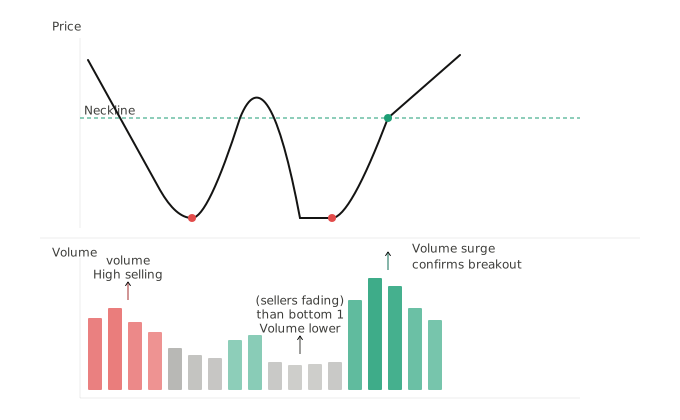
Pay attention to the volume bars beneath the price chart. The declining volume on the second bottom suggests sellers are exhausting. The volume surge on the neckline breakout confirms genuine buying interest.
Timeframe Guidance
The double bottom pattern can appear on any timeframe, from 5-minute charts to weekly charts. However, patterns on higher timeframes tend to be more reliable because they represent stronger levels of support.
For most forex traders, the H1, H4 and Daily timeframes offer the best balance between signal quality and trade frequency. Lower timeframes such as M5 or M15 produce more signals but are more prone to false breakouts.
Pattern Variations
Uneven Bottoms
The two lows do not always form at exactly the same price. A slightly higher second bottom can indicate that buyers are stepping in earlier, which is sometimes considered a stronger signal.
Rounded Second Bottom
Instead of a sharp V-shaped bounce, the second bottom may form a more gradual, rounded shape. This often reflects a slower accumulation phase where buyers are building positions over time.
Failed Double Bottom (False Breakout)
Sometimes price breaks above the neckline briefly before reversing and continuing lower. To reduce this risk, wait for a candle close above the neckline and look for candlestick confirmation such as a bullish engulfing pattern.
How to Trade a Double Bottom Step by Step
- Identify the pattern. Wait for two clear lows at a similar level.
- Wait for confirmation. Do not enter until price closes above the neckline.
- Plan your entry. Enter on the breakout candle close, or wait for a retest.
- Set your stop loss. Below the second bottom with a small buffer.
- Define your target. Measure the distance from the bottoms to the neckline, project upward.
- Manage the trade. Consider trailing your stop or taking partial profits.
This approach gives a clear risk-to-reward framework. A well-formed double bottom typically offers a reward-to-risk ratio of at least 1.5:1 or better.
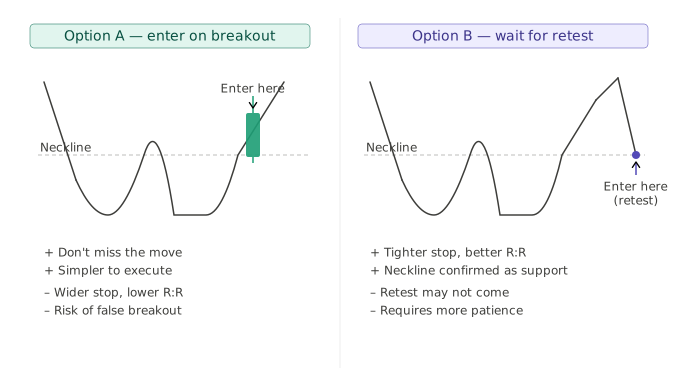
The left panel shows a breakout entry where you enter as soon as price closes above the neckline. The right panel shows a retest entry where you wait for price to pull back to the neckline before entering.
Where to Place a Stop Loss
Your stop loss should sit below the second bottom. Add a small buffer to account for spread and minor wicks. Avoid placing your stop loss too tight.
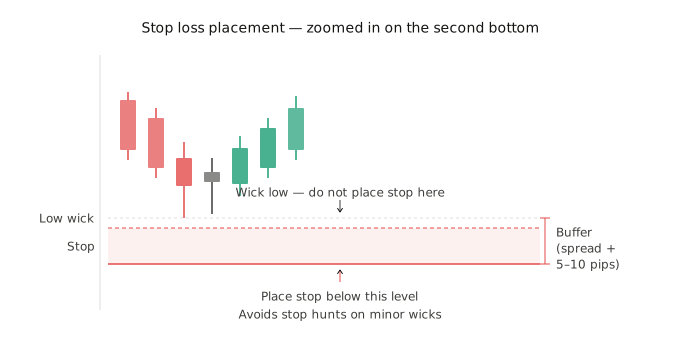
The diagram shows the stop loss placed below the second bottom with a small buffer. This buffer accounts for spread, minor wicks, and normal price noise.
Risk Management Considerations
- Only risk 1% to 2% of your account on any single trade.
- Calculate your position size based on entry to stop loss distance.
- Ensure your potential reward justifies the risk.
- Do not increase position size because a pattern looks perfect.
Common Mistakes Traders Make
- Entering before the neckline breaks.
- Ignoring the broader trend.
- Using the pattern in isolation.
- Setting unrealistic profit targets.
- Forcing the pattern. Not every "W" shape is a valid double bottom.
Example Scenario Using a Forex Pair
Suppose GBP/USD has been falling from 1.2800 to 1.2500. Price hits 1.2500 and bounces to 1.2620 before pulling back to 1.2510. The neckline sits at 1.2620. When price closes above 1.2620, the double bottom is confirmed. A trader might enter at 1.2625 with a stop at 1.2490.
The measured move target is 120 pips (1.2620 minus 1.2500), giving a target of 1.2740. The risk from entry to stop is 135 pips. This gives a reward-to-risk ratio of approximately 0.89:1. The trader might wait for a neckline retest to improve the entry.
This is a hypothetical example for educational purposes only.
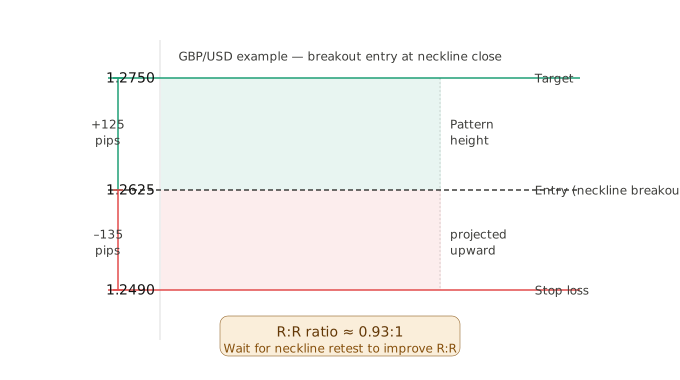
This diagram illustrates how risk and reward are calculated on a double bottom trade. The risk is measured from the entry to the stop loss, while the reward is measured from the entry to the target.
Final Thoughts
The double bottom is one of the most widely recognised reversal patterns. It is straightforward to identify and gives clear rules for entry, stop loss and target. Always use it alongside proper risk management.
Ready to Practise This Pattern?
Choose an FCA regulated broker with competitive spreads. Brokers such as IG and Pepperstone offer strong charting tools for pattern recognition. Compare two of these broker platforms supporting these patterns side by side.
Risk Warning: Spread betting and CFDs are complex instruments and come with a high risk of losing money rapidly due to leverage. Between 70-80% of retail investor accounts lose money when trading CFDs. You should consider whether you understand how CFDs work and whether you can afford to take the high risk of losing your money.